Monthly Archives

October 2026

AMCF Women's Giving Circle seal

More Than a Donation: The Power of Women Giving Together

By BLOG No Comments

Building connections, sharing knowledge, and strengthening communities through the AMCF Women’s Giving Circle.

What if your charitable giving could do more than support a worthy cause? What if it introduced you to inspiring women, helped you discover remarkable nonprofits, and opened doors to new opportunities?

That’s the idea behind the American Muslim Community Foundation (AMCF) Women’s Giving Circle, where Muslim women come together to learn, connect, and give collectively.

Rooted in the Islamic tradition of sadaqah, the Circle recognizes that generosity extends beyond financial contributions. Sharing expertise, volunteering, making introductions, and amplifying an organization’s story all matter.

These actions reflect the 5 T’s of philanthropy: Time, Talent, Treasure, Testimony, and Ties.

Now in its fourth annual cycle, the Women’s Giving Circle has welcomed 48 nonprofit nominees and distributed approximately $56,000 to nine grantees. With this year’s giving, that total is expected to reach about $73,000, with three more organizations to be selected through the 2026 voting process.

A Seat at the Circle

You don’t need to be a major donor or a philanthropy expert to participate!

Women can join for just $5 per month, with voting membership beginning at $35 per month or $420 annually. Larger gifts are welcome, but the Circle’s strength comes from the people, perspectives, and relationships its members bring.

Members connect through an optional WhatsApp group, a weekly newsletter, and opportunities to discover nonprofit initiatives nationwide. A dedicated Leadership Circle of women also helps guide the initiative.

Men are welcome to donate or sponsor a female friend or family member, while membership and voting are reserved for women.

How Does the Women’s Giving Circle Work?

Each summer, typically in August, members nominate organizations whose work deserves greater recognition and support.

The Circle prioritizes nonprofits led by or serving American Muslim women, underserved communities, and unmet community needs. Eligible organizations must be 501(c)(3) nonprofits primarily serving the United States; fiscally sponsored initiatives may also qualify.

Nominees complete a brief application and obtain a Candid Gold or Platinum Seal of Transparency, with AMCF offering guidance to help meet this requirement.

All qualifying nominees advance to the first round of asynchronous voting.

But being nominated is about more than competing for funding.

Every nominee receives a social media spotlight and an invitation to share their story through an AMCF blog post. Organizations can also explore the AMCF Nonprofit Directory, schedule individual conversations, and connect with others doing complementary work.

The five organizations receiving the most votes advance to Decision Day, where each delivers a five-minute pitch followed by five minutes of questions.

AMCF helps finalists prepare through a pitch workshop featuring experienced nonprofit and business professionals, along with technical support.

Decision Day launches the final week of voting. Members can attend live or watch the recording before casting their votes.

The three selected organizations receive funding as unrestricted grants, new endowments, or contributions to existing endowments.

Where Connections Create Opportunities

One of the Circle’s greatest strengths is what happens beyond the voting.

Nominees and grantees can join a dedicated WhatsApp community to exchange resources and opportunities. AMCF also works to simplify applications, reduce reporting burdens, and make participation accessible.

For members, connections can open unexpected doors.

Dr. Nausheena Hussain shared findings from her applied research project and dissertation, Organizational Infrastructure, Challenges, and Leadership Resilience: A National Study of Muslim Women-Led Nonprofits in the United States, through the AFP Muslim Affinity Group, co-moderated by AMCF, and most recently with the AFP Women in Impact group, elevating research on Muslim women nonprofit leaders.

Dyma Musallam AbuOleim, Founder and President of 200 Muslim Women Who Care, was among the Circle’s founding members and participated in research informing Philanthropy Together’s national report on collective giving. Her organization was also selected as a 2025 Women’s Giving Circle grantee.

Fiona Motala, CEO and Founder of Lekker Kitchen, participated in the AMCF x COR CDC Banking on Your Success entrepreneurship program. She earned first place in the pitch competition, securing $5,000 toward marketing and participation in a national food distribution industry event.

These stories show how shared knowledge, relationships, and access to resources can help women advance their work and strengthen communities.

Part of a Growing Movement

Collective giving is gaining momentum nationwide.

According to Philanthropy Together’s 2024 In Abundance report, nearly 4,000 giving groups engaged approximately 370,000 participants and contributed more than $3.1 billion between 2017 and 2023.

Equally meaningful, 91% of surveyed participants reported that collective giving positively influenced their sense of community belonging.

For Muslim women, a giving circle offers another way to put the principles of sadaqah into practice while developing leadership, building friendships, and supporting meaningful causes.

Growing Our Impact in 2026 and Beyond

Members have historically raised approximately $15,000 per cycle. For 2026, our goal is $20,000, and we’re already approaching $17,000!

Donations are still being accepted through December 31, with funds distributed in early 2027 to the three organizations selected by voting members. After a modest operating fee, the funds will be divided 50%, 30%, and 20%.

But the opportunity to make a difference doesn’t end with the grant awards. Success is also found in organizations discovered, partnerships formed, and opportunities shared.

Discover, Connect, and Amplify!

All 15 of our 2026 nominees, along with organizations from previous cycles, have stories worth discovering.

Explore our Women’s Giving Circle Nominee Pages to learn about their missions, celebrate their accomplishments, and discover ways to support their work.

Read. Share. Connect. Donate. Whether you volunteer, make an introduction, or amplify an organization’s story, every action helps strengthen our communities.

There’s Room for You at the Circle

The Women’s Giving Circle continues to grow, and we invite you to be part of what comes next!

Whether you’re interested in giving, learning, sharing your expertise, or connecting with other women committed to making a difference, there’s a place for you.

Learn more about the AMCF Women’s Giving Circle and subscribe to our weekly newsletter using the form at the bottom of the page.

Join or donate through Grapevine to support collective giving in 2026 and beyond.

Because the greatest impact isn’t always measured in dollars, but in the connections we build and the good we accomplish together.

Research source: In Abundance: An Analysis of the Thriving Landscape of Collective Giving in the U.S., 2024.
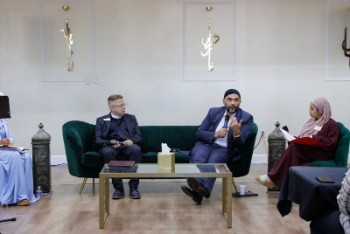
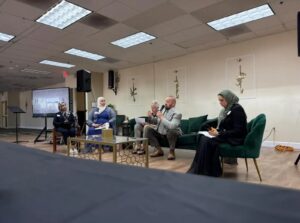
Interfaith panel discussion at the Institute for Muslim Advancement and Renewal 2026 mental health symposium

Building the Muslim Renaissance in America: Spotlighting the Institute for Muslim Advancement and Renewal (IMAR)

By BLOG No Comments

How should people of faith think about mental health, economics, public health, political leadership, and the other pressing questions of our time? The Institute for Muslim Advancement and Renewal (IMAR) was created to help answer that question with care, rigor, and openness.

IMAR is an emerging research and publishing initiative dedicated to bringing Islamic thought into meaningful conversation with the challenges facing Americans today. Founded by Imam Mohamed A. Azeez, IMAR is a project born of the Tarbiya Institute community and operates independently. It brings together scholars, researchers, faith leaders, practitioners, and emerging writers to examine contemporary issues through interdisciplinary research, public dialogue, and accessible publications.

Research That Reaches Beyond the Academy

Serious intellectual work too often stays inside universities and journals that most people never read. IMAR is working to change that. Through annual journals, public symposia, books, and multimedia programming, it aims to make thoughtful research accessible to everyone, and to build relationships across communities along the way.

That approach reflects a simple conviction: the Islamic intellectual tradition has something valuable to offer American society, and its insights belong in the public square as well as the classroom.

A First Symposium on Mental Health

On October 3, 2026, IMAR hosted its inaugural symposium in the Greater Sacramento Area, Mental Health: Beyond Industry Barriers and Biases. The gathering brought together Muslim, Christian, Jewish, and other community voices alongside academics, mental health professionals, and members of the public for substantive conversations about well-being.

Panelists discuss mental health and well-being at the IMAR 2026 symposium
Photo: Digital Contrast Media

The symposium accompanied IMAR’s 2026 journal, pairing published research with open, in-person dialogue. It is a model of what IMAR hopes to do each year: take a question that matters to families and communities, study it carefully, and bring people of different backgrounds together to talk about it honestly.

IMAR will also convene working groups to translate Islamic principles into practical solutions for the public good, such as advancing water-based cleansing in American restrooms as a matter of public health and hygiene.

Attendees at the IMAR 2026 symposium, Mental Health: Beyond Industry Barriers and Biases
Photo: Digital Contrast Media

Next: The Anatomy of Leadership

Building on that momentum, IMAR’s 2027 research and symposium theme is The Anatomy of Leadership. The work will explore how political leaders are formed, cultivated, and held accountable, bringing faith and ethical perspectives into conversation with political research.

It is a timely subject. Questions of leadership and accountability shape every community, and IMAR’s approach invites readers to consider them through the lens of faith and ethics as well as policy.

Partner With IMAR

As IMAR grows, it is actively seeking partnerships with institutions, community organizations, and supporters who share its commitment to thoughtful research, meaningful dialogue, and the lasting contribution of the Islamic tradition to American society.

“We’re grateful to AMCF for helping introduce this work to a wider audience,” IMAR shared.

We are glad to help. Initiatives like IMAR strengthen the intellectual life of our community and help ensure that Muslim voices are part of the conversations shaping our shared future.

Support IMAR. You can give directly through IMAR’s patronage page, or find IMAR in the AMCF Nonprofit Directory. If you hold a donor-advised fund with AMCF, you can recommend a grant from there.

Learn more about IMAR, its symposium, and its publications at tarbiya.org/imar.

Photos courtesy of Digital Contrast Media.

Amplifying Muslim Voices in Libraries: The Islamic Library Association, a 2026 Women’s Giving Circle Nominee

By BLOG No Comments

The Islamic Library Association is one of the organizations nominated for the 2026 AMCF Women’s Giving Circle cycle. A member of the Circle put their name forward, and the organization went on to successfully complete the application. We publish a feature on each nominee so that voting members know who they are choosing between, and so the wider community can see the range of Muslim-led work our members put forward.

Libraries do not only serve communities. They help shape how communities are seen. That conviction is what led a Muslim librarian, educator, and mother to found the Islamic Library Association in 2024, after recognizing that the diversity, equity, and inclusion commitments libraries publicly hold did not extend to Muslim patrons, Muslim authors, or Muslim library workers.

Below, the Islamic Library Association describes the gap she found, the moment she knew the work was landing, and where ILA is headed next, in her own words.

The Gap I Found in My Own Library System

As a Muslim librarian, educator, and mother, I began to recognize a gap not only within my own library system, but in libraries throughout the country when it came to the limited number of books that represented Muslims, as well as incorrect tagging and cataloging, inaccurate depictions, tokenism, and stereotypes. Working within library spaces also reminded me that libraries do not only serve communities. They help shape perceptions within society.

As libraries claim to be equitable, diverse, and inclusive, it was apparent to me that Muslims were not included in those efforts. A little girl in hijab should not automatically check off the diversity box. Librarians should acknowledge the diversity of Muslims as a whole in America and understand that Muslims cannot be represented by one image, one experience, or one story.

Muslims positively and continuously contribute to the literary landscape, yet many library practices do not always align with the inclusive policies and values libraries say they uphold. I believed Muslims should have the space to write books about their everyday experiences, but I also wanted those books to be accessible and discoverable alongside other books within our libraries and communities.

I also recognized a gap within our profession. The American Library Association has numerous committees, round tables, affiliates, and other groups representing the interests and concerns of different communities and library workers, yet there was no comparable national association specifically centered on Muslims. Muslim patrons lacked a dedicated space within the library profession to address their literary and community needs, and Muslim library workers lacked that space as well.

These experiences led me to establish the Islamic Library Association in 2024. Our mission is to increase awareness, access, and discoverability of resources representing the diversity of Muslim communities, support their educational, spiritual, and cultural needs, and help counter Islamophobia through more accurate and nuanced representation.

When I Knew It Was Working

I knew ILA was having an impact within Muslim communities when I began giving Muslim authors a space to highlight themselves and their work in ways they may not have otherwise had. They were able not only to promote their books, but to tell the story behind the story.

What confirmed for me that ILA was making a difference was when non-Muslim librarians began contacting me for booklists, presentations, and guidance on selecting books that authentically represented Muslims. One librarian told me she had been searching for Muslim representation within the American Library Association and had never found it. She eventually found the Islamic Library Association through Instagram, and later we were able to meet in person at the ALA Annual Conference.

That experience stayed with me because it confirmed that the need I had recognized was not only something Muslims were experiencing. Librarians were looking for this connection too. That is when I realized ILA was becoming what I wanted it to be: a bridge between the needs of Muslim communities and public, school, and academic libraries.

Broadview Magazine, and What Comes Next

One achievement I am especially proud of is the creation of Broadview Magazine. Librarians use different review resources to help with book selection, but because of how books are selected for review, many books by and about Muslims never make it into the resources librarians rely on. ILA created Broadview to help fill that gap by providing book reviews, highlighting Muslims who contribute to the literary and educational landscape, and sharing upcoming opportunities for those interested in Muslim literary topics.

A future goal for ILA is to become affiliated with the American Library Association, so that ILA can become a space within ALA that addresses the needs of Muslim communities and works toward change in library policy and practice nationally.

How to Support ILA

People can support the Islamic Library Association by becoming a member. Membership helps demonstrate, as we work toward ALA affiliation, that people believe authentic, accurate, and equitable Muslim representation through books, programs, and services is important. People can also donate through our website to help ILA attend important conferences and continue providing resources for the community.

People can also support us by following and sharing our work on Instagram, Facebook, and LinkedIn, subscribing to our YouTube channel to hear our interviews, or partnering with ILA. Each individual and organizational connection helps demonstrate that Muslims deserve to feel that they belong not only in libraries, but within our society.

Why We Are Featuring the Islamic Library Association

ILA is on this list because a Women’s Giving Circle member nominated them and they completed the application. That is the whole reason, and it is the point of the Circle: the organizations we fund are chosen by our members, not selected for us.

Representation work inside a profession is slow, structural, and hard to fund. A cataloging practice corrected, a booklist put in a librarian’s hands, a national association opened to Muslim membership: these are changes that compound quietly over years and then hold. An organization two years into its existence, pursuing affiliation with a body as established as the American Library Association, needs patient support far more than it needs a single large check. Whether it receives this cycle’s funding is now a decision for the Circle’s voting members.

How the Women’s Giving Circle Decides

The AMCF Women’s Giving Circle pools the giving of Muslim women and decides together where it goes.

Members who give $5 or more during a cycle can nominate one organization. Voting members, who give $420 or more per cycle or $35 monthly, vote in two rounds: the first narrows the nominees to five finalists, and the second selects three grantees. Finalists and grantees are announced at AMCF’s annual awards ceremony in November.

Meet all of the 2026 nominees and see the full range of work our members put forward this cycle.

Join the Women’s Giving Circle, or upgrade to voting membership, so the choice between these nominees is partly yours.

You can also learn more about the Islamic Library Association at ila-us.org or email info@ila-us.org, and follow ILA on Instagram, Facebook, LinkedIn, and YouTube.

American Muslim Poll 2025: What ISPU’s Data Says About Muslim Voters and Civic Engagement

By BLOG No Comments

On October 8, AMCF welcomed Dr. Saher Selod, Director of Research at the Institute for Social Policy and Understanding (ISPU), for a webinar on the American Muslim Poll 2025, ISPU’s report titled Evolving Electorate, Enduring Challenges. With the November midterms only weeks away, Dr. Selod walked through how American Muslims voted in 2024, what they care about, and how their civic engagement is changing. The session included ASL interpretation by the Minnesota Deaf Muslim Community.

About the American Muslim Poll 2025

This is ISPU’s seventh American Muslim Poll. It was fielded by NORC at the University of Chicago, an independent, nonpartisan research organization, between April and May 2025, and it oversamples Muslims and Jews so their views can be compared reliably with Catholics, Protestants, white Evangelicals, the non-affiliated, and the general public. ISPU uses the findings to brief policymakers, and the data is widely cited in the media.

Who American Muslims Are

American Muslims are the most racially and ethnically diverse faith group in the country: 28% Asian, 24% white, 20% Black, and 12% Arab. They are also the youngest. About 26% of Muslims are ages 18 to 24, compared with 10% of the general public. And faith matters: 89% say religion is important in their daily lives.

How Muslims Voted in 2024

Muslim voter registration has climbed from 60% in 2016 to 85% in 2025, and Dr. Selod expects it to keep growing. Muslims were also the group most likely to report obstacles to voting in 2024 (37%, compared with 11% of the general public), including long lines and intimidation.

In the 2024 presidential race, 50% of Muslim voters chose Kamala Harris, 31% chose Donald Trump, and 12% chose Jill Stein. That surprised many observers, since pre-election polling had suggested a much larger third-party share. The data also shows real diversity of political views inside the community, including a wide gender gap: 42% of Muslim men voted for Trump, compared with 17% of Muslim women.

Policy Priorities

The economy and job creation topped the list for Muslim voters (41%), followed by the war in Gaza (35%) and healthcare. Only 5% of the general public ranked Gaza as a top issue. Notably, Gaza was a shared priority for Muslim voters regardless of which candidate they supported.

Civic Engagement Beyond the Ballot

Muslims are more likely than most groups to contact their elected officials. In 2025, 22% reported contacting a federal official, up from 17% in 2019, while the general public dropped from 31% to 17% over the same period.

Islamophobia and Discrimination

ISPU’s Islamophobia Index, which measures agreement with five negative stereotypes about Muslims on a 0 to 100 scale, rose among the general public from 25 in 2022 to 33 in 2025. Muslims remain the faith group most likely to report religious discrimination (63%), a rate that has held steady since ISPU began the poll in 2016.

From the Discussion

Dr. Selod pointed to a contradiction: anti-Muslim rhetoric is rising, and so is civic engagement, as targeted communities respond by registering voters and running for office.

One attendee asked about research connecting election seasons and anti-Muslim hate. Dr. Selod pointed to the Center for the Study of Organized Hate and noted that anti-Muslim rhetoric tends to spike during election cycles. Another attendee asked how organizations can support this kind of research. Dr. Selod’s answer was simple: if a legitimate research firm contacts you, take the survey. Rigorous data is what earns attention from policymakers and the media.

AMCF Director of Community Programs Lisa Kahler added that nonprofits can encourage civic participation without endorsing candidates, and invited organizations to share their general engagement resources with AMCF’s network. Executive Director Shazeen Mufti closed by reminding attendees that collective impact takes all of us working together.

Get Involved

Have data or civic engagement resources to share with the community? Email Lisa@amuslimcf.org.

Want donors to find your nonprofit? Join us for Grow Your Nonprofit’s Reach: An Introduction to the AMCF Nonprofit Directory on November 10 at 2:00 PM ET, or join the Nonprofit Directory today.

Read the full report at ISPU’s American Muslim Poll 2025 page.

AMCF Leaders at the Concordia Forum Diplomatic Reception During UNGA 2026

By BLOG No Comments

AMCF Board Members Amna Khan-Mirza and Anwar Khan joined Co-Founder Muhi Khwaja in New York on September 24 for the Concordia Forum Diplomatic Reception, the Forum’s fourth annual gathering held during the United Nations General Assembly.

UNGA week brings heads of state, diplomats, and civil society leaders from around the world into a few square miles of Manhattan. Alongside the official sessions, dozens of convenings take place across the city. The Concordia Forum’s reception has become one of the gatherings where Muslim leaders from government, business, faith, and philanthropy meet in the same room.

What Is the Concordia Forum?

The Concordia Forum is a transatlantic fellowship of Muslim leaders working across public life, business, and civil society. Participation is by invitation or recommendation, and its network spans more than 2,500 leaders in over 50 cities. Its Annual Diplomatic Reception brings that network together with diplomats, policymakers, and faith leaders during UNGA week.

This year’s reception took up a question that also ran through the General Assembly itself: how leaders can rebuild trust across faiths, cultures, and borders. The Forum framed the evening around restoring trust across faiths and building a shared future, a timely theme in a year when polarization and declining confidence in institutions are putting real pressure on communities everywhere.

Why AMCF Was in the Room

Muslim philanthropy in America is not a side conversation. Through AMCF alone, donors have distributed more than $28 million to over 1,000 nonprofits. More than 276 families and individuals give through AMCF donor-advised funds, and more than 25 nonprofits have built permanent endowments with us.

Those numbers represent something that matters in rooms like this one. When policymakers and diplomats talk about trust, civil society, and community resilience, American Muslim donors are already doing that work. They fund food security, refugee support, education, health access, and civic engagement in communities across the country and around the world.

Showing up at gatherings like the Concordia Forum reception is part of how AMCF connects that giving to the larger conversation about where the world is headed and who gets a seat at the table.

The AMCF Leaders at the Reception

Muhi Khwaja is AMCF’s Co-Founder and Chief Development Officer. He leads strategy, new business development, and fundraising for the foundation and works closely with our Board of Directors. He also hosts the #MuslimPhilanthropy Podcast, which features the organizations our donors support.

Anwar Khan serves on AMCF’s Board of Directors. He is the CEO of Muslim Aid and a co-founder of IDEA (formerly known as Islamic Relief), and brings more than 30 years of experience in humanitarian and development work. He also serves on the boards of World Food Program USA and the Alliance to End Hunger.

Amna Khan-Mirza serves on AMCF’s Board of Directors. She is an award-winning marketing and brand strategist who has put the Muslim experience at the center of her work, and she leads her own brand consultancy focused on using influence for social good.

Together they bring decades of experience in fundraising, humanitarian leadership, and storytelling for mission-driven organizations. That mix is exactly what AMCF brings to conversations with global leaders: practical knowledge of how communities give, and what that giving can build.

Building the Infrastructure for Muslim Philanthropy

AMCF exists to make giving easier, more strategic, and more lasting for American Muslims. Whether you want to open a donor-advised fund, join a giving circle, or help a nonprofit build an endowment that lasts for generations, our team is here to help.

Want to learn more about the people behind AMCF? Meet our team and Board of Directors.

From Generosity to Infrastructure: Strengthening the Muslim Philanthropic Ecosystem Through Connection

By BLOG No Comments
Prefer to listen? Press play for an AI-narrated audio version of this article, one more way we are working to make our content welcoming and easy to enjoy for everyone.

Generosity runs deep in Muslim communities across the United States. U.S. Muslims gave an estimated $1.8 billion in zakat alone in 2021, according to the Muslim Philanthropy Initiative at Indiana University’s Lilly Family School of Philanthropy. That is a community with a strong culture of giving and enormous potential for collective impact.

Yet generosity alone does not guarantee that the organizations we care about will thrive.

Across the nonprofit sector, organizations continue to navigate challenges with funding, visibility, capacity, and long-term growth. Small and mid-sized nonprofits in particular may be doing deeply meaningful work without the networks or infrastructure they need to consistently reach new donors and supporters.

That raises an important question for Muslim philanthropy: How do we turn the generosity already present in our communities into stronger, more sustainable nonprofit institutions?

At the American Muslim Community Foundation (AMCF), we believe part of the answer lies in strengthening the infrastructure that connects those who give with those doing the work.

The Visibility Gap in Muslim Philanthropy

The AMCF Nonprofit Directory did not come from a single conversation or initiative. It grew out of years of listening to nonprofit leaders, donors, funders, and community members.

In those conversations, one challenge kept coming up: nonprofits needed more ways to connect with donors, and donors needed better ways to discover the full range of organizations doing good work.

Donors naturally give to organizations they already know, trust, or have a personal connection to. Relationship-based giving is a beautiful part of philanthropy, but it can also leave organizations outside a donor’s circle unseen, no matter how important or effective their work may be.

For nonprofits, especially smaller and emerging ones, that is a real barrier. An organization can have a compelling mission, strong community ties, and meaningful impact, and still struggle to reach new supporters.

This is not simply a fundraising challenge. It is an infrastructure challenge.

A strong philanthropic ecosystem needs more than generosity. It needs ways for people to discover organizations, build relationships, see clearly what organizations do, and move resources across a diverse network of causes.

The AMCF Nonprofit Directory is one contribution toward building that infrastructure.

Creating a Shared Infrastructure for Connection

The Nonprofit Directory is a central platform that connects nonprofits with donors, funders, and the broader community.

At its simplest, the Directory helps people discover nonprofit organizations and learn about their missions and work. Its larger purpose, though, is to strengthen the connections that a healthy philanthropic ecosystem depends on.

  • For nonprofits, it opens another pathway to visibility.
  • For donors, it widens the range of organizations and causes they can discover.
  • For the broader community, it offers a fuller picture of the many institutions meeting needs locally, nationally, and globally.

In that sense, the Nonprofit Directory is more than a database. It is infrastructure for Muslim philanthropy.

Its value is not measured by how many organizations it lists, but by the relationships and opportunities that greater visibility makes possible: a donor discovering a new cause, a volunteer finding an organization that matches their passions, two nonprofits finding ways to collaborate, or a community member learning about resources available to them.

From Discovery to Engagement

Visibility matters most when it leads to meaningful engagement.

That is why Directory profiles are designed to help visitors move from learning about an organization to taking action. Each profile can link supporters directly to an organization’s website and donation page, while giving the context someone needs when they encounter that work for the first time.

For participating nonprofits, there are three primary benefits:

  • Increase your visibility. Make it easier for donors, donor-advised fund holders, endowment holders, community members, and other nonprofits to discover your work.
  • Connect with supporters. A Directory profile opens pathways not only to donors, but also to volunteers, prospective employees, nonprofit partners, and community members who want to engage with your mission.
  • Own your story. Update your profile anytime as your programs, priorities, and impact grow.

The Directory is free for participating nonprofits, so cost is never a barrier to joining.

Moving From Generosity to Collective Impact

Our community does not lack generosity.

The greater opportunity is to keep building the systems, relationships, and institutions that turn that generosity into lasting impact.

A directory alone will not solve the complex funding and capacity challenges nonprofits face. But improving how organizations are discovered, how they share their work, and how donors encounter causes beyond their existing networks is an important step toward a more connected philanthropic ecosystem.

That is why the long-term vision for the AMCF Nonprofit Directory reaches beyond visibility.

It is about creating an environment where nonprofits can more easily find supporters, donors can give with greater confidence, organizations can find collaborators, and communities can better understand the institutions working on their behalf.

The strength of Muslim philanthropy is reflected not only in how much we give, but in the infrastructure we build so that our generosity can reach, strengthen, and sustain the organizations serving our communities.

Join the AMCF Nonprofit Directory

A stronger philanthropic ecosystem is built together, with participation from across our community.

If your nonprofit is not yet in the AMCF Nonprofit Directory, we warmly invite you to register and build your profile. Use it to tell your story, grow your visibility, and open new pathways for donors, volunteers, partners, and community members to engage with your work.

If you are a donor or community member, we invite you to explore the Directory beyond the organizations you already know. Discover a new organization. Learn about a cause outside your usual circle. Consider how your giving, volunteering, or connections might support its work.

If your organization is already listed, we encourage you to keep your profile current so it grows along with your work.

For step-by-step guidance on registration, accessing the AMCF Portal, managing your profile, and more, visit our Nonprofit Directory FAQ.

You are also welcome to drop in to our Nonprofit Directory Office Hours, held the first Tuesday of each month from 1:00 to 2:00 p.m. ET. Our next session is Tuesday, November 3.

The platform is built. Its value will be shaped by the community that takes part in it.

Together, inshAllah, we can move from generosity to connection, and from connection to stronger institutions, greater capacity, and lasting impact.