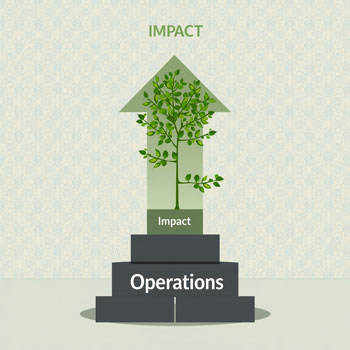
When You Fund Operations, You’re Funding Possibility
Philanthropic overhead investment is one of the most misunderstood concepts in charitable giving. Donors often want 100% of their gift to go “directly to programs,” but this mindset misses a crucial truth: the infrastructure that processes, manages, and optimizes charitable giving is what makes all programs possible.
At the American Muslim Community Foundation, we’ve learned that the most effective donor advised funds and endowments aren’t just about moving money – they’re about building systems that multiply the impact of every dollar donated. This requires what some call “overhead,” but what we recognize as essential investment in your philanthropic success.
Reframing the Overhead Conversation
The term “overhead” suggests waste, inefficiency, or money that could be better spent elsewhere. But when it comes to Muslim philanthropy, operational costs represent strategic investments that enhance the effectiveness of all charitable giving.
Consider your donor advised fund: the “overhead” includes the expertise that helps you give more strategically, the compliance systems that maximize your tax benefits, the due diligence that ensures your grants reach legitimate organizations, and the technology that makes giving convenient and transparent.
Without these investments, your DAF would be nothing more than a basic bank account with charitable restrictions. The value comes from the infrastructure built around it.
What “Overhead” Actually Funds
Professional Expertise: When Nora, our Director of Donor Relations, helps you develop a giving strategy that increases your charitable impact by 40% through better timing and tax optimization, that consultation is “overhead.” But it’s also the reason your philanthropy becomes more effective.
Compliance Systems: The accounting and legal infrastructure that ensures your donor advised fund meets IRS requirements while maintaining Islamic principles isn’t “overhead” – it’s protection for your charitable assets and reputation.
Due Diligence Operations: When our team researches nonprofits to ensure your grants support legitimate, effective organizations, that research time gets classified as “overhead.” But it’s actually risk management that protects your giving intentions.
Technology Platforms: The secure systems that allow you to manage your DAF online, track your giving history, and coordinate with family members represent “overhead” costs. They’re also what makes modern philanthropy accessible and efficient.
The Hidden ROI of Operational Investment
Philanthropic overhead investment generates returns that compound over time, making all future giving more effective:
Enhanced Donor Capacity
Strong operational support helps donors give more strategically. AMCF donors who receive professional guidance typically increase their annual giving by 25-30% within two years – not because they have more money, but because they have better systems for maximizing impact.
Improved Nonprofit Outcomes
When AMCF invests in nonprofit capacity building and compliance support, the organizations receiving grants become more effective. This means donor advised fund grants create greater impact per dollar distributed.
Reduced Transaction Costs
Efficient operational systems lower the time and effort required for charitable giving. Donors can focus on strategy and impact rather than paperwork and compliance, leading to more thoughtful and generous giving decisions.
Risk Mitigation
Professional oversight prevents costly mistakes. When grants go to well-vetted organizations with strong financial management, donors avoid the reputational and financial risks of supporting ineffective or problematic nonprofits.
The Compound Effect in Muslim Philanthropy
Muslim philanthropy faces unique challenges that make operational investment even more critical:
Islamic Compliance Complexity
Ensuring donor advised funds and endowments operate according to Islamic principles requires specialized knowledge and ongoing consultation with religious authorities. This expertise prevents donors from inadvertently violating their religious commitments while pursuing charitable goals.
Community-Specific Due Diligence
Muslim-led nonprofits often operate in contexts that require cultural and religious understanding for proper evaluation. Generic charity rating systems may miss important factors that affect organizational effectiveness in Muslim communities.
Coordination Across Diverse Communities
The American Muslim community includes immigrants, converts, and multi-generational families with different cultural backgrounds and giving traditions. Effective philanthropy requires systems that can bridge these differences and facilitate collaboration.
Regulatory Navigation
Muslim charitable giving intersects with complex regulations around international grantmaking, religious compliance, and tax optimization. Professional navigation of these requirements protects donors and maximizes charitable effectiveness.
Case Study: How Infrastructure Investment Multiplies Impact
Consider two scenarios for a $100,000 donor advised fund:
Scenario A: Minimal Infrastructure
- Basic fund management with limited oversight
- Generic investment options without Islamic screening
- Minimal nonprofit vetting beyond legal requirements
- Simple grant processing without strategic guidance
Result: Donor makes grants totaling $80,000 over five years to various organizations, some more effective than others. Limited tax optimization and investment growth.
Scenario B: Professional Infrastructure
- Comprehensive donor advising and strategic planning
- Sharia-compliant investment management
- Thorough nonprofit due diligence and impact assessment
- Coordinated giving strategies and family engagement
Result: Donor makes grants totaling $95,000 over five years to highly effective organizations, achieves optimal tax benefits, maintains stronger family engagement in philanthropy, and sees fund growth that enables continued giving.
The “overhead” investment in Scenario B generates an additional $15,000 in charitable impact, plus improved outcomes from better nonprofit selection, plus enhanced family philanthropic culture, plus ongoing fund growth for future giving.
Why the Cheapest Option Costs More
Philanthropic overhead investment often appears expensive compared to basic charitable services, but the total cost of inadequate infrastructure includes:
Missed Opportunities
Poor timing of charitable gifts can cost donors thousands in unnecessary taxes. Inadequate investment management reduces endowment growth. Limited strategic planning leads to scattered giving with reduced cumulative impact.
Relationship Costs
When donor advised funds lack proper service infrastructure, family conflicts over giving decisions become more likely. Poor communication systems strain relationships between donors and recipient organizations.
Reputation Risks
Grants to inadequately vetted organizations can create public relations problems and damage donor credibility. Compliance failures can trigger IRS investigations and legal complications.
Reduced Motivation
Donors who struggle with complicated, poorly supported giving systems often reduce their charitable activity over time. Streamlined, professional infrastructure encourages increased generosity.
The Strategic Philanthropist’s Perspective
The most effective Muslim philanthropists understand that sustainable change requires investment in the systems that create and maintain impact. They ask different questions:
Instead of “What percentage goes to overhead?” they ask “How does this infrastructure help my giving create more impact?”
Instead of “Can I find cheaper options?” they ask “Which platform will help me achieve my philanthropic goals most effectively?”
Instead of “Why should I pay for operations?” they ask “How can I invest in systems that multiply my charitable effectiveness?”
This mindset shift transforms “overhead” from a necessary evil into a strategic investment that enhances every aspect of charitable giving.
Building Antifragile Philanthropy
Nassim Taleb’s concept of “antifragility” – systems that get stronger under stress – applies perfectly to philanthropic infrastructure. Strong operational systems don’t just survive challenges; they become more effective because of them.
During the COVID-19 pandemic, AMCF’s robust infrastructure allowed rapid response to community needs. Donor advised funds could quickly process emergency grants. Digital systems maintained operations when physical offices closed. Professional relationships with nonprofits enabled coordinated crisis response.
Organizations with minimal infrastructure struggled to maintain operations, process grants, or coordinate effectively during the crisis. Their “low overhead” became a liability when circumstances demanded resilience and rapid adaptation.
The True Cost of Underfunding Operations
Many charitable organizations operate on artificially constrained budgets that create long-term problems:
Staff Burnout and Turnover
Underfunded operations lead to overworked staff, high turnover, and institutional knowledge loss. This creates inefficiencies that ultimately cost more than adequate staffing would have required.
Technology Debt
Delayed investment in systems and technology creates mounting costs and reduced effectiveness over time. Modern donor advised fund management requires sophisticated platforms that can’t be maintained on minimal budgets.
Compliance Vulnerabilities
Inadequate legal and accounting infrastructure creates risks that can be catastrophically expensive if problems arise. Professional compliance systems prevent costly mistakes and regulatory issues.
Missed Strategic Opportunities
Organizations focused purely on cost minimization often miss opportunities for growth, partnership, and innovation that could dramatically increase their impact.
Your Investment in Excellence
When you support AMCF’s operational infrastructure through unrestricted giving, you’re making a strategic investment in the effectiveness of all Muslim philanthropy:
Enhanced Donor Services
Your investment funds the professional staff who help donors develop more effective giving strategies, navigate complex regulations, and coordinate family philanthropy initiatives.
Improved Technology Systems
Operational support maintains and upgrades the digital platforms that make donor advised fund management convenient, secure, and transparent.
Expanded Capacity
Infrastructure investment allows AMCF to serve more donors, manage larger endowments, support more nonprofits, and facilitate greater charitable impact across the Muslim community.
Innovation and Growth
Unrestricted support enables experimentation with new approaches, research into effective practices, and development of solutions for emerging challenges in Muslim philanthropy.
The Partnership Perspective
Think of your relationship with AMCF not as a transaction where you pay fees for services, but as a partnership where you invest in shared infrastructure that benefits the entire Muslim philanthropic ecosystem.
Your donor advised fund benefits from professional management, but so do all other DAF holders. Your endowment receives expert oversight, but so do other endowments in our care. Your giving circle gets facilitiation support, but so do other collaborative initiatives.
This shared infrastructure creates economies of scale that make professional-quality philanthropic services accessible to more members of the Muslim community. Your investment in operations helps build capacity that serves donors beyond yourself.
The Compound Returns of Infrastructure Investment
Unlike program grants that create immediate but finite impact, investment in philanthropic infrastructure generates returns that compound over time:
Year One: Better systems improve your own giving effectiveness and experience.
Year Three: Enhanced capacity allows AMCF to serve more donors and facilitate greater total charitable impact.
Year Five: Institutional knowledge and relationships create opportunities for coordination and collaboration that individual donors couldn’t achieve alone.
Year Ten: Mature infrastructure enables innovations in Muslim philanthropy that transform how the entire community approaches charitable giving.
Year Twenty: The next generation inherits sophisticated systems that make their philanthropy more effective from the start.
Making the Investment Decision
The question isn’t whether to pay for operational costs – you’ll pay them one way or another, either through fees at a professional organization or through reduced effectiveness at a minimal-cost provider.
The question is whether to invest in infrastructure that makes your philanthropy more effective, or to accept limitations that reduce your charitable impact in exchange for lower operational costs.
At AMCF, we’ve chosen to build professional-quality infrastructure because we believe Muslim philanthropy deserves excellence. Our donor advised funds, endowments, and giving circles operate with institutional-quality systems because that’s what creates maximum impact for our community.
When you invest in our operations through unrestricted support, you’re funding the excellence that makes your own philanthropy more effective while building capacity that serves the broader Muslim philanthropic community.
The Bottom Line
Philanthropic overhead investment isn’t about paying bills – it’s about funding possibility. Every dollar invested in professional infrastructure multiplies the effectiveness of all future charitable giving.
When you fund operations, you’re funding the expertise that makes your donor advised fund more strategic, the systems that make your endowment more effective, the relationships that make your giving circles more impactful, and the innovation that makes Muslim philanthropy more powerful.
That’s not overhead. That’s the foundation of lasting change.
Ready to invest in infrastructure that multiplies your philanthropic impact? Support AMCF’s operational excellence and help build the systems that make all Muslim charitable giving more effective.
For questions about strategic philanthropy and operational investment, contact us at info@amuslimcf.org.