Empowering Community Through Collaborative Efforts

What 22 Muslim nonprofits learned over three years of working together — and the harder, slower, more honest work that real collaboration requires.
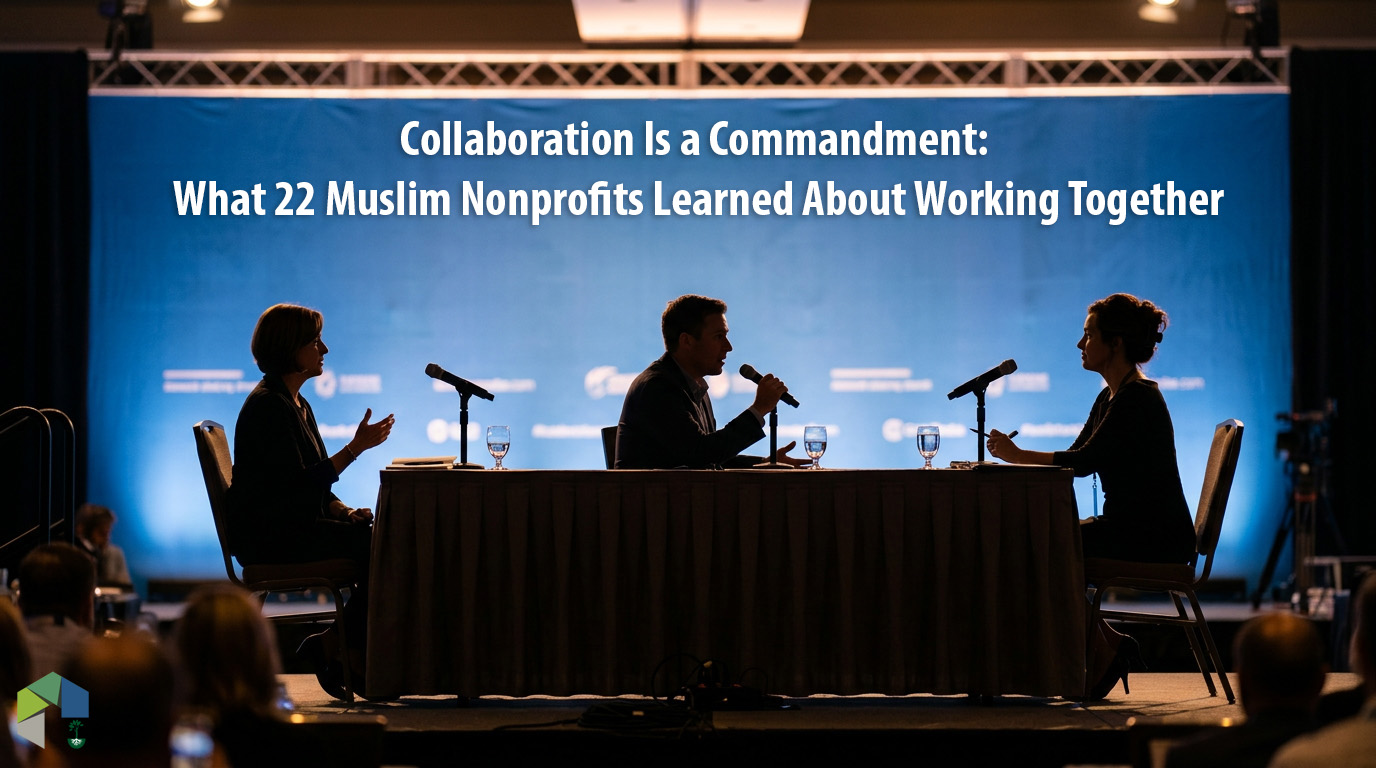
Day Two opened with a panel that pulled the lens in close on the question Anwar Khan’s keynote had raised the day before. Three years. 22 organizations. One sustained experiment in what it actually takes for Muslim nonprofits to work together. The conversation was moderated by Shazeen Mufti, Executive Director of AMCF, with Arshia Ali-Khan, CEO of the Muslim Legal Fund of America, and Abdul Samad of the Muslim Philanthropy Initiative at Indiana University’s Lilly Family School of Philanthropy.
The Year Spent Just Building Trust
Of the entire three-year Community Collaboration Initiative, the most surprising design decision was that the first full year was spent on one thing: trust.
When a group of people say, stop, sit with each other, and build trust — we’re like, what are we doing? Build trust? How do we do it?— Arshia Ali-Khan
Abdul Samad named the distinction directly: there’s personal trust, built from years of knowing someone casually, and there’s professional trust, which is what holds collaborations together when one organization has to depend on another to deliver. Most Muslim nonprofits, the panel argued, have plenty of the first and very little of the second.
From Defense to Community Connector
When Arshia took over the Muslim Legal Fund of America, it was by design a defense organization — people got in trouble, MLF picked up the case. Sitting with the patterns inside the initiative, she began asking a different question: why do people only learn about MLF when they’re already in trouble? The answer reframed the organization from a defense fund into a community connector, and the organization has grown 280% since the start of the pandemic.
I couldn’t stand back and watch our community fall through the cracks because nobody was there to pick them up.— Arshia Ali-Khan
Embrace the Hard
The most-discussed thread of the panel was what Arshia kept calling the hard. She spoke openly about being a woman in leadership spaces that are, as she put it, very male and very immigrant. About the day she received a major collaboration check and started crying, because everyone else in her cohort had dropped out and she had stood alone to take it.
Allah never said it was supposed to be easy. I want us to embrace the hard.— Arshia Ali-Khan
From Scarcity to Abundance
Threaded through the entire panel was a single shift: moving the Muslim nonprofit sector from a scarcity mindset to a mindset of abundance. Small organizations not seeing larger ones as competitors. Funders investing in operational capacity, not just programs. Leaders willing to call each other when something’s wrong instead of working around it.
Stop looking for balance. Look for harmony. Sometimes you turn up the volume, and sometimes you turn it down.— Arshia Ali-Khan
Watch the full session
78 minutes, with chapter markers. Free for summit attendees · full library access for everyone else.
Watch the session →The 3rd Annual AMCF Nonprofit Summit is in Detroit on September 3, 2026. Theme: Community Building.