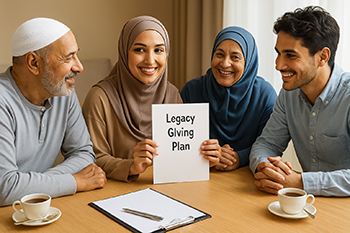
Mash-Allah! This month, AMCF is actively engaged with both virtual and in-person events, providing educational resources to build awareness around philanthropic vehicles. Through the Social Impact Accelerator, we offer valuable tools for nonprofits and community members, addressing key topics and strengthening capacity-building efforts.
In-Person Events
Shura Council General Body Meeting – California
AMCF is honored to be a new member of Southern California’s Shura Council, an umbrella organization serving 350K Muslims in SoCal. On February 1st, our Giving Circle Manager, Lisa Kahler, attended our first General Body Meeting, witnessing the historic swearing-in of the Shura Council’s first female board chair, Deana Helmy, LMFT, officiated by Dr. Muzammil H. Siddiqi.
Lisa also connected with AMCF grant recipients MSA West (now Manara West) and Olive Community Services, along with many of the 75+ member organizations in attendance.
Our Co-Founder & Chief Development Officer, Muhi Khwaja, recently attended the 200 Muslim Women Who Care gathering in Tampa, FL, where he shared insights on the impact of giving circles, donor-advised funds, and endowments in charitable giving.
Donor-Advised Funds 101 Webinar: “Learn How to Turn Your Investments Into Giving”
Join Muhi Khwaja (AMCF Co-Founder) and Monem Salam (Executive Vice-President, Saturna Capital) for an introduction to donor-advised funds (DAFs) and how they can simplify tax filing while maximizing impact in philanthropy.
Hosted in collaboration with The National Muslim Planned Giving Council, the National Muslim Endowment Council, AMCF, and Saturna Capital.
Boost Your Nonprofit: FREE Fundraising & Capacity-Building Tools
📅 Wednesday, February 19th @ 3 PM PT | 6 PM ET
A must-attend event for nonprofit professionals! Join Zahra Bokhari Hassan, Sr. Development Manager at Candid and AMCF Women’s Leadership Circle member, as she shares essential Fundraising & Capacity Building Tools. This session, hosted by AMCF’s Muslim Women’s Giving Circle, will provide actionable strategies to elevate your nonprofit’s success.
We look forward to an exciting and impactful month ahead! Stay connected with AMCF for more events, resources, and opportunities to elevate your giving.
🎧 Prefer to listen? This blog is also available in audio format to support Muslim accessibility. Press play to hear the full post narrated.
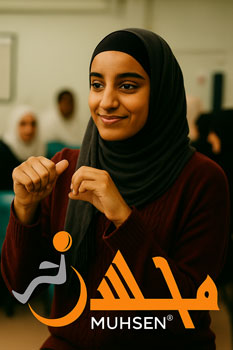
Muslim accessibility is essential for a just, inclusive community. The Minnesota Deaf Muslim Community (MDMC) has been a pioneering organization since its founding in 2013. Its mission is simple yet vital: ensuring effective access to communication, education, and resources for Deaf, DeafPlus, DeafBlind, and Hard of Hearing (DHH) individuals. Through these efforts, MDMC empowers underserved community members, fostering self-sufficiency and a better quality of life.
MDMC focuses on equipping the community through transformative programs such as:
Alternative Literacy Support (Alt-LS): A program that provides explicit access to written English through American Sign Language (ASL) for those who need it.
Deaf Gain Innovations Apprenticeship Program (DGIP): A workforce solutions initiative that offers on-the-job training to enhance career opportunities.
Deaf Advocacy: Advocating for legal, civil, and human rights for the DHH community.
While these programs have been groundbreaking, significant barriers to inclusivity and accessibility remain—particularly in virtual and in-person Muslim spaces. By examining the challenges MDMC addresses, other communities and organizations can adopt inclusive practices to support DHH individuals.
Barriers to Accessibility
Communication Gaps in Muslim Communities
One of the most pressing challenges for DHH Muslims is communication barriers within their own families. Many Deaf immigrants are often the only Deaf person in their household, making communication extremely difficult. Without family members who know sign language, Deaf individuals experience severe isolation, which can lead to mental health issues such as anxiety, depression, and low self-esteem.
Additionally, within the broader Muslim community, there is often limited awareness of the unique needs of DHH individuals. Some Muslim-led organizations resist efforts to create accessible spaces, largely due to a lack of familiarity with DHH needs. This cycle of ignorance and inaction prevents meaningful inclusion.
Limited Access to Resources and Services
DHH Muslims struggle with limited access to education, religious teachings, and social services. MDMC has worked tirelessly to provide free ASL interpreting services at essential events, including Jummah prayers, family reunions, and community celebrations. However, the broader issue of underrepresentation remains a significant concern.
For many DHH individuals, written language can be a challenge, particularly when educational services do not cater to their needs. Without specialized literacy support, tasks such as filling out job applications, understanding legal paperwork, or accessing religious materials become even more difficult.
Cultural and Institutional Barriers
The organizational culture within some Muslim institutions, especially those that are traditionally male-led, can perpetuate exclusionary practices. Resistance to accessibility measures isolates the DHH community and prevents meaningful engagement.
As Muslims, we are taught to stand for justice—even against ourselves. MDMC works to educate the community that barriers to accessibility constitute an act of injustice against Deaf Muslims, and it is our collective responsibility to foster inclusivity.
Solutions & Approaches
Despite these challenges, MDMC continues to implement effective solutions that enhance access and empower the DHH Muslim community.
Pro Bono ASL Interpreting Services
MDMC has broken down communication barriers by providing free ASL interpreting at local mosques—especially during Jummah prayers—as well as at family gatherings and social events. This effort has significantly reduced isolation and created a more welcoming and inclusive environment.
Note: Free interpreting services are available only for Deaf individuals. Hearing individuals requesting interpreters may hire MDMC’s services at affordable rates.
Alternative Literacy Support (Alt-LS)
Traditional education often fails DHH students, particularly by not providing strong literacy foundations in ASL. Through the Alt-LS program, MDMC helps DHH individuals gain English literacy skills through ASL-based instruction, enabling them to navigate:
Driver’s education & license applications College coursework & job applications Legal & social security documents Immigration paperwork
This program empowers individuals by equipping them with the tools needed to participate fully in society.
Deaf Gain Innovations Apprenticeship Program (DGIP)
MDMC’s workforce development program prepares DHH individuals for career success or entrepreneurship. By focusing on accessible workforce solutions, this initiative empowers individuals to become self-sufficient and contribute meaningfully to their communities.
Community Engagement & Advocacy
MDMC actively advocates for the rights of DHH Muslims, ensuring they are not left alone to navigate social services and legal systems. The organization empowers individuals to defend their rights while pushing for greater inclusivity in faith-based spaces.
Conclusion
The Minnesota Deaf Muslim Community has made tremendous strides in advancing accessibility and empowerment for DHH individuals. However, many barriers remain—from cultural resistance to inadequate institutional support.
Through tireless advocacy, innovative programs, and a commitment to inclusivity, MDMC demonstrates that the Deaf, DeafPlus, DeafBlind, and Hard of Hearing communities—both Muslim and non-Muslim—can thrive when provided with the right resources, education, and support.
Fostering a more inclusive and just society requires a collective effort from both hearing and DHH individuals. By embracing understanding, compassion, and actionable change, we can ensure that no one is left behind in Muslim spaces or beyond.
To learn more about MDMC’s work or support their mission, visit their website.
I pray that this Ramadan fills your heart with tranquility, deep reflection, and abundant blessings. This sacred month is a time of renewal—renewing faith, renewing our connection to community, and renewing our commitment to giving.
At the American Muslim Community Foundation (AMCF), we believe that charity isn’t just about giving today—it’s about building a sustainable legacy that lasts for generations. Amid political uncertainty, funding shortfalls, and the increasing need for faith-driven philanthropy, AMCF remains steadfast in amplifying the power of Muslim generosity while upholding our values.
Your Impact, Your Legacy: Build a Sustainable Sadaqah Fund
Your generosity is shaping the future of Muslim philanthropy.
To the 240 families who have entrusted AMCF with their zakat and sadaqah—thank you. Since 2017, we have distributed over $21 million through Donor-Advised Funds (DAFs) to more than 900 nonprofit organizations. DAFs ensure that your giving is not just impactful today but continues to support causes you care about in the years to come.
Structured giving strengthens our collective impact. As government support fluctuates, philanthropy fills the gaps. By setting up a Donor-Advised Fund, you can ensure your giving remains consistent, strategic, and sustainable. Learn how to start your own charitable fund atamuslimcf.org/dafs
We also provide anonymized data to research institutions, highlighting the deep intersection of faith and philanthropy and showcasing the generosity of the American Muslim community.
Empowering the Next Generation Through Your Sadaqah Jariyah
One of AMCF’s most impactful initiatives is managing the Noor Kids Education Foundation, ensuring that Muslim children worldwide grow up with confidence in their faith. We also partner with Averroes High School, where alumni like Omar Din—the youngest Muslim ever elected to the Sunnyvale City Council—lead with purpose and conviction.
By establishing a long-term sadaqah fund, you help create a lasting source of support for Islamic education and leadership development, ensuring that future generations thrive in their faith and service.
Strengthening Muslim Institutions for the Future
Endowments are critical to securing financial sustainability for Islamic organizations. Through the National Muslim Endowment Council, AMCF manages endowments for 27 Muslim charities, helping mosques, schools, and nonprofits build financial security that lasts beyond our lifetimes.
Now is the time to invest in your legacy. Encourage your mosque, school, or favorite nonprofit to start an endowment fund today:amuslimcf.org/endowments
AMCF’s Ramadan Activity Guide
Our 2025 Ramadan Giving Box Challenge encourages families to engage children ages 5-12 in daily reflections on 30 Qur’anic verses about charity, zakat, and generosity.
Daily ibadah (worship) checklist
Qur’anic verses & reflections on sadaqah
Interactive “giving box” challenge to encourage structured giving
Families are encouraged to build their own sadaqah boxes, track their giving, and decide where to donate as a family.
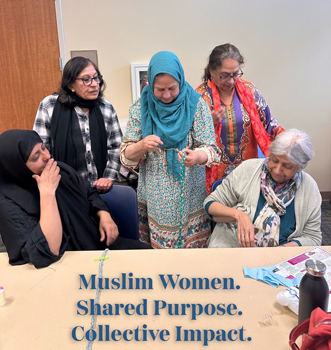
The American Muslim Women’s Giving Circle has distributed $50,000 to six transformative organizations. This Ramadan, honor the women in your life by supporting initiatives that uplift communities through compassionate giving.
You can also join our Interfaith Giving Circle Confronting Hate or Next Generation Giving Circle—structured platforms designed to channel collective generosity into sustained impact. Learn more atamuslimcf.org/giving-circles
A Commitment to Palestine That Endures
Through the AMCF Collaborative Fund for Palestine, we have distributed $750,000 in humanitarian aid and advocacy. In 2024, we successfully reinstated UNRWA USA as a recipient on the Fidelity Charitable platform, ensuring continued access to critical funding.
Your support fuels sustained relief efforts for Palestinian families in need. Learn more:amuslimcf.org/palestine
Strengthening the Nonprofit Sector for Long-Term Impact
Are you involved in a Muslim-led nonprofit? AMCF provides critical resources, including monthly webinars, an Annual Nonprofit Summit, and the Muslim Philanthropy Awards to recognize leaders who are shaping the future of giving.
Save the date for our Annual Symposium on November 22, 2025 to connect, learn, and collaborate:amuslimcf.org/events
This Ramadan, Make Your Sadaqah an Ongoing Legacy
AMCF’s 2025 budget is $500,000, our largest ever. With a dedicated team of 2 full-time and 10 part-time staff, we are working tirelessly to expand our reach and deepen our impact.
Our Ramadan goal: $250,000—and we can’t do it without you.
🌙 Make a lasting impact today—whether it’s $10,000, $1,000, $100, or $10. Consider setting up a monthly donation or a Donor-Advised Fund to sustain your legacy of giving beyond Ramadan.
May Allah accept your fasting, prayers, and charitable giving this Ramadan, and may your generosity continue to bless communities for generations to come.
Muslim women in philanthropy are reshaping the landscape of charitable giving. When I first began exploring Islamic philanthropy, I viewed myself as just a donor—someone who calculated her zakat during Ramadan and wrote checks to local organizations. Like many Muslim women, I didn’t see myself as a “philanthropist.” That word conjured images of billionaires and their massive foundations, not an ordinary Muslim woman trying to make a difference in her community.
My perspective shifted dramatically when I connected with the American Muslim Community Foundation (AMCF). Through AMCF, I discovered the power of collective giving and the importance of strategic philanthropy that aligns with both Islamic values and social impact. Opening a Donor-Advised Fund (DAF) at AMCF was a transformative step in my philanthropic journey. I named it after my mother and mother-in-law—the Razia & Asghar Foundation—honoring the women who first taught me about generosity despite having limited means themselves.
The DAF allowed me to be more intentional with my giving while avoiding capital gains taxes on appreciated stock—meaning more of my wealth could go directly to causes I care about. But beyond the tax benefits, AMCF opened my eyes to the broader landscape of Muslim philanthropy. Through their giving circle, I joined other Muslim women in making collective funding decisions, amplifying our individual contributions into meaningful grants for community organizations.
This experience helped me recognize that Muslim women have always been philanthropists—from Khadija (RA), who supported the early Muslim community, to countless women throughout history who established awqaf (endowments) for education, healthcare, and community development. We stand in a long tradition of Muslim women who used their resources, whether abundant or modest, to serve others.
As I detail in my new book Prosperity with Purpose: A Muslim Woman’s Guide to Abundance and Generosity, we need more Muslim women to see themselves as philanthropists and take control of their financial futures. Research shows that by 2030, women will control $30 trillion in financial assets in America. Muslim women need to be part of this transfer of wealth—not just as beneficiaries, but as active participants who can direct resources to our communities’ needs.
AMCF plays a crucial role in making this vision possible by providing the tools, education, and community for Muslim women to grow in their giving. Whether through DAFs, giving circles, or other vehicles for collective philanthropy, AMCF helps us move from ad hoc charitable giving to strategic, impactful philanthropy aligned with our values.
My hope is that more Muslim women will recognize their power as philanthropists and find community in organizations like AMCF. Together, we can build on our rich heritage of Muslim women’s philanthropy while creating new models of collective giving for the future. When we combine our resources—our time, talent, and treasure—we multiply our impact far beyond what any of us could achieve alone.
Recent Comments